Analytics of Player Session Lengths Influencing Progressive Free Spin Configurations in Licensed Online Gaming Environments

Operators in regulated digital gaming spaces collect extensive session length data from player accounts, and this information feeds directly into the design of progressive free round structures that adjust based on cumulative play patterns across thousands of accounts. Aggregated metrics reveal average session durations, peak activity windows, and drop-off points, which platforms then use to calibrate how free rounds unlock and scale over time.
Platforms track these lengths through timestamped logs that capture login intervals, spin frequencies, and idle periods without storing individual identifiers in raw datasets, while compliance teams ensure adherence to data protection standards set by bodies like the Nevada Gaming Control Board. In practice, sessions averaging under 12 minutes often correlate with lower retention rates, prompting operators to introduce early-stage free round triggers that activate after a fixed number of consecutive plays.
Collection and Aggregation Processes
Data aggregation begins at the server level where every game interaction receives a timestamp, and nightly batch processes compile these into anonymized histograms that show distribution curves for session lengths across user cohorts segmented by game type and jurisdiction. Researchers have noted that platforms operating in multiple markets combine these datasets to identify regional variations, such as longer evening sessions in certain time zones compared to shorter midday bursts elsewhere.
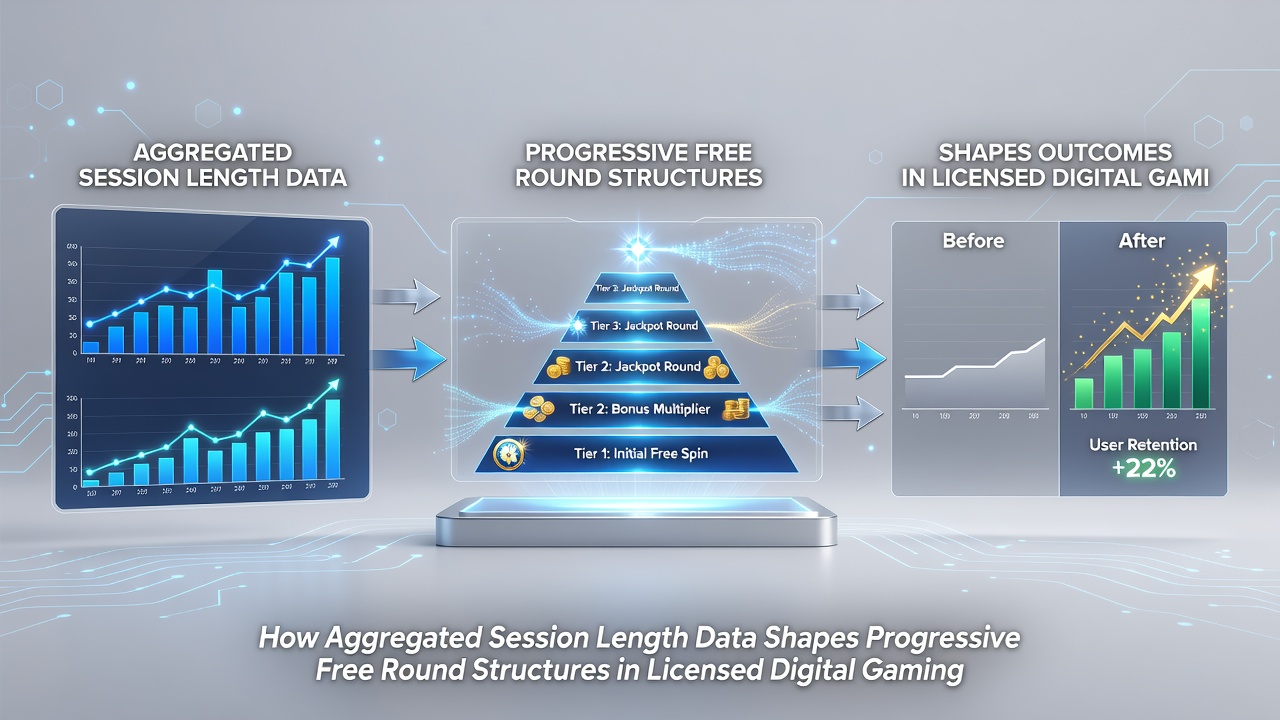
Statistical models apply clustering algorithms to group sessions into buckets, for instance 5-15 minutes versus 30-60 minutes, and these clusters determine the progression speed of free round ladders where longer average sessions accelerate the release of higher-tier bonuses. Figures released in June 2026 by several North American operators indicated that sessions exceeding 25 minutes produced a 34 percent higher likelihood of reaching the third tier of progressive structures compared to shorter engagements.
Structural Adaptations in Free Round Mechanics
Progressive free round frameworks evolve when aggregated data highlights consistent patterns, such as players who maintain sessions between 18 and 22 minutes showing sustained engagement that justifies expanding the number of free spins awarded at each milestone. Engineers adjust parameters so that free rounds scale not only with deposit volume but also with verified play duration thresholds derived from platform-wide averages.
One study from the University of Nevada Reno Gaming Research Center demonstrated that operators who recalibrated their free round unlock criteria using session length quartiles experienced measurable shifts in player progression rates, with mid-length sessions triggering additional rounds at rates 19 percent above baseline models. These adjustments occur quarterly, and June 2026 updates across several platforms incorporated fresh data reflecting post-holiday play behaviors that extended average session times by 7 minutes in select markets.
Integration with Regulatory Compliance
Licensed environments require that any data-driven changes to free round structures receive approval from oversight agencies, and aggregated session metrics must remain auditable to prevent manipulation that could affect fairness. The Australian Communications and Media Authority has published guidelines requiring operators to document how session analytics influence bonus parameters, ensuring transparency for both regulators and players.
Platforms maintain separate audit logs that map session length distributions to specific free round release schedules, and these records undergo periodic review to confirm that progression mechanics align with responsible gaming thresholds established in each jurisdiction. Observers note that such documentation helps distinguish between organic data trends and intentional design choices that might otherwise raise compliance questions.
Observable Effects on Retention Metrics
Retention analytics show correlations between session-informed free round progressions and extended account activity, particularly when structures reward consistent mid-length sessions with incremental free spin multipliers. Industry reports indicate that players whose session profiles match the aggregated medians tend to complete more progression stages before natural churn occurs.
Case examples from multi-state operators reveal that recalibrating free round gates around the 20-minute session mark produced measurable upticks in weekly active accounts, while shorter or longer outliers prompted separate retention experiments. These patterns emerge from continuous monitoring rather than one-time adjustments, allowing structures to adapt as overall play habits shift across the licensed ecosystem.
Conclusion
Aggregated session length data continues to serve as a foundational input for refining progressive free round architectures in licensed digital gaming, with operators applying statistical insights to balance player engagement and regulatory expectations. As datasets grow more granular through 2026 and beyond, the mechanisms linking play duration to bonus progression will likely incorporate additional variables such as device type and time-of-day patterns while maintaining strict compliance boundaries.