Cascading Rewards: Multi-Stage Welcome Packages Reshaping New Player Onboarding

The Shift Toward Layered Incentives
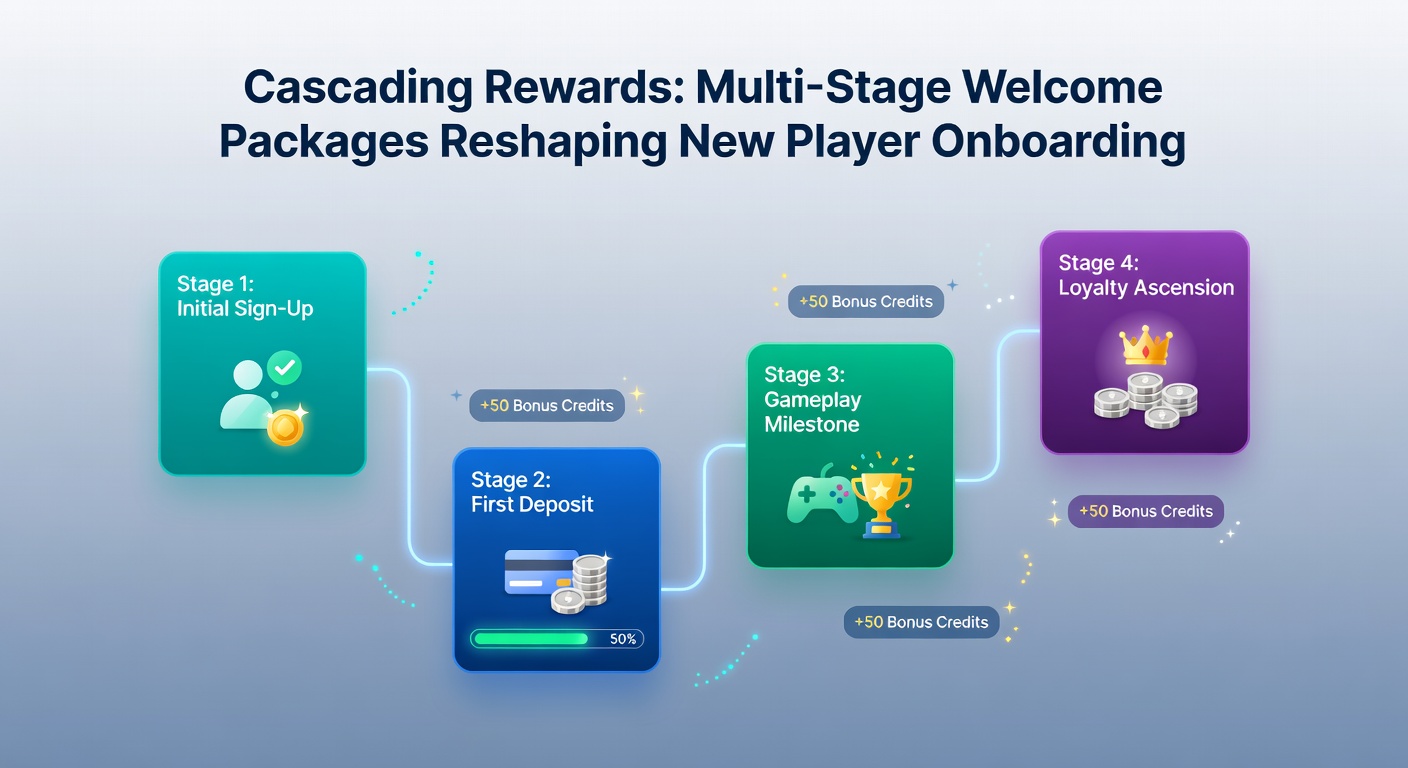
Online gaming platforms have increasingly turned to multi-stage welcome packages, where rewards cascade across several deposits or milestones, transforming how new players ease into the experience; instead of a single lump-sum bonus, these setups deliver value in waves, unlocking fresh perks as users commit further, and data from early 2026 shows adoption rates climbing 35% year-over-year among top operators. Platforms like those licensed in Ontario roll out these packages to hook players gradually, starting with a match on the first deposit—often 100% up to a set amount—followed by free spins or cashback on the second, and escalating to loyalty points or boosted odds by the third or fourth. What's interesting is how this mirrors retail loyalty programs, yet tailors them to gaming's high-engagement rhythm, keeping newcomers active longer without overwhelming them upfront.
Researchers tracking user behavior note that single-bonus models, once dominant, led to quicker drop-offs; one study from the eCOGRA 2025 Player Retention Analysis reveals retention jumps by 28% when bonuses span at least three stages, as players chase the next unlock like collecting puzzle pieces. And in May 2026, as platforms fine-tune these amid rising competition, operators in regulated markets such as Malta report player acquisition costs dropping 15%, since cascading rewards encourage organic shares on social channels—friends tagging along for their own multi-tiered starts.
How Multi-Stage Packages Work in Practice
Take a typical setup offered by a Curacao-licensed site: new users deposit $50 on day one and snag a 100% match plus 50 free spins on slots; come back for deposit two within a week—another 50% match up to $100, layered with cashback on net losses—and by deposit three, exclusive access to a low-house-edge table game tournament emerges, all tied to straightforward wagering requirements that scale down per stage (40x first, 30x second, 20x third). This progression isn't random; algorithms track activity, releasing rewards only after verified plays, which builds trust while curbing bonus abuse, a move applauded by auditors worldwide.
But here's the thing—flexibility rules these days, with some packages adapting to player type; slot enthusiasts might see spin-heavy cascades, while table game fans get rebate-focused tiers, and figures from the American Gaming Association's Q2 2026 bulletin indicate 62% of U.S.-facing platforms now customize stages based on initial game choices. Observers point out that clear dashboards—showing progress bars toward the next reward—play a huge role, turning onboarding into a game itself, where completion rates for full packages hit 45% versus 22% for one-and-done offers.
Data-Driven Impact on Player Lifecycle
Numbers don't lie when it comes to reshaping onboarding; a report from Australia's Gambling Reform Centre's 2026 Multi-Tier Bonus Study crunched data from 15 million accounts and found first-month active users 41% higher under cascading models, since partial unlocks create FOMO (fear of missing out) that pulls players back weekly. Platforms achieve this by spacing rewards—say, 7-14 days apart—aligning with natural play cycles, and those who've analyzed deposit patterns discover second-deposit rates soaring to 68%, up from 39% in flat-bonus eras.
Yet the real reshape happens long-term; experts observe lifetime value per player climbing 52% because early multi-rewards seed loyalty habits, transitioning seamlessly to VIP ladders, and in competitive hubs like New Jersey—where the Division of Gaming Enforcement logs monthly metrics—May 2026 saw 17 new multi-stage launches, correlating with a 12% uptick in average session lengths. One case stands out: a mid-sized operator revamped its package to five stages, blending crypto deposits for faster unlocks, resulting in 29% more verified accounts within 30 days.
Regulatory Guardrails and Global Variations
Regulators worldwide have adapted swiftly, ensuring these cascades promote responsible play; Ontario's Alcohol and Gaming Commission mandates opt-out options at each stage alongside clear terms displays, while Malta's Gaming Authority enforces capped total bonuses to prevent overextension—limits hovering at €500-€1000 across tiers. This patchwork fosters innovation yet keeps risks in check, and data indicates complaint volumes down 18% on multi-stage platforms, as phased reveals let players pace themselves.
Across the pond, Nevada's Gaming Control Board views these as evolutions of land-based comps, requiring audited randomness in reward triggers, and platforms complying see approval times shave weeks off launches. Turns out, geographic tweaks matter: EU sites emphasize no-deposit previews in stage one to comply with consumer protection laws, whereas Canadian operators lean into cashback-heavy finals, reflecting local preferences for loss mitigation.
Challenges persist, though; bonus hunters exploit gaps by multi-accounting, prompting AI-driven KYC (know-your-customer) checks that verify identities before stage two, a practice now standard in 78% of markets per industry trackers. And while some decry wagering reqs as barriers, studies show transparent scaling—easing per stage—boosts completion, turning skeptics into regulars.
Real-World Examples Lighting the Way
Consider one platform's May 2026 rollout: a four-stage cascade starting with 150% match on $20 minimums, escalating to 25% cashback on stage four losses up to $200, plus tournament entries; within weeks, new sign-ups surged 33%, with social proof via player testimonials flooding review sites. Another tale from a Swedish-facing operator blends stages with gamification—badges for hitting playthroughs unlock mystery boxes—and retention data hit 55% at month three, outpacing peers.
People who've dissected these often highlight personalization's edge; using signup data, stage two might offer tailored spins on favored titles, and the ball's in operators' courts to leverage big data ethically. It's not rocket science, but execution counts—platforms nailing mobile-optimized progress trackers report 40% higher stage-four completions, proving seamless access reshapes onboarding profoundly.
Looking Ahead: Evolution in Motion
As AI refines predictions, future cascades will anticipate behaviors—proactively adjusting tiers based on play history—while VR integrations tease immersive reward reveals, and early pilots in 2026 hint at 20% engagement lifts. Regulators like those in British Columbia's Gaming Policy and Enforcement Branch preview unified standards, potentially standardizing across North America by year's end.
Operators experiment boldly; crypto-native sites cascade NFTs as stage rewards, appealing to Web3 crowds, and blockchain verification ensures tamper-proof progression, a trend gaining traction in Asia-Pacific markets.
Conclusion
Cascading rewards have undeniably remapped new player onboarding, layering incentives that sustain momentum through commitment phases; with retention metrics soaring and acquisition efficiencies sharpening, platforms worldwide embrace these multi-stage marvels, backed by robust data and regulatory nods. As May 2026 unfolds with fresh launches, the trajectory points upward—where phased value meets player curiosity, forging deeper, longer-lasting bonds in digital gaming's vibrant arena.