Geolocation Dynamics in Customizing Smartphone Gambling Rewards

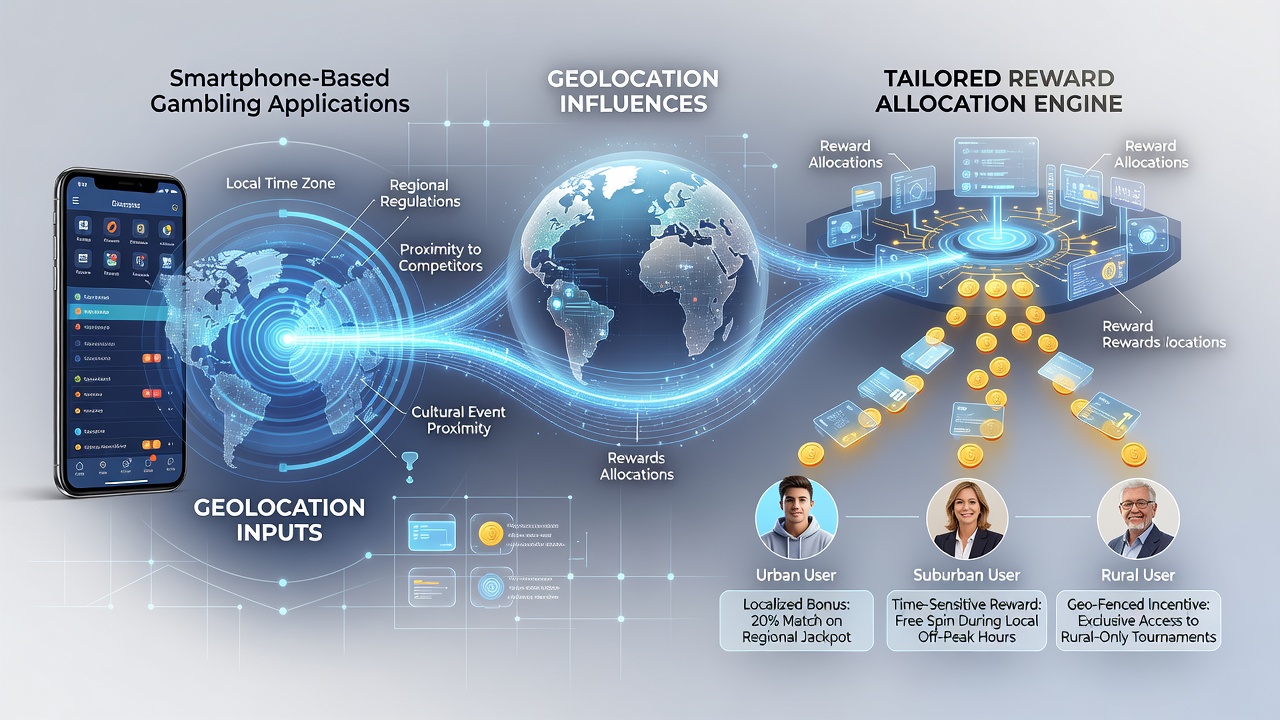
Smartphone-based gambling applications rely on geolocation data to adjust reward structures according to user position, regulatory boundaries, and regional activity patterns. Location services integrated into these platforms collect GPS coordinates, IP addresses, and Wi-Fi signals to determine eligibility and personalize offers such as deposit matches, free spins, and cashback percentages. Data indicates that operators use this information to comply with state-specific licensing rules while tailoring incentives to local user behaviors observed in aggregated platform logs.
Regulatory Compliance Through Location Verification
Geolocation technology enforces jurisdictional restrictions because gambling laws differ across states and countries. Operators activate geo-fencing protocols that block access or modify reward availability when users cross borders, for instance restricting certain bonus types near tribal lands or during periods when local statutes limit promotional mechanics. In July 2026 several U.S. state regulators updated their digital verification standards, requiring apps to log location data at the start of each session and at random intervals during play. Those updates stem from industry reports showing that precise positioning reduces unauthorized play in restricted zones while allowing operators to allocate rewards only where permitted.
Personalization Mechanisms Driven by Location Signals
Platforms analyze geolocation alongside historical play data to generate individualized reward offers. Urban users near major events may receive time-limited multipliers tied to local sports schedules, whereas users in suburban areas often see offers calibrated to evening usage peaks recorded in regional datasets. Research from academic institutions demonstrates that such location-triggered personalization correlates with higher session durations because rewards appear more relevant to immediate surroundings and schedules. Algorithms weigh factors including distance from competitor venues, population density metrics, and seasonal tourism data to adjust allocation values without manual intervention.
Data Sources and Integration Methods
Applications combine satellite GPS with cellular triangulation and network-based positioning to achieve accuracy within a few meters. When users grant permission, the system cross-references location history with transaction logs to predict preferred game types and optimal reward timing. Industry organizations such as the National Council on Problem Gambling have documented how these integrations help platforms distinguish between tourists and residents, enabling differentiated reward tiers that reflect spending patterns observed in each group.
Impact on User Retention and Acquisition Patterns
Geolocation-informed rewards influence how frequently players return to an application. Data collected across multiple operators reveals that offers triggered by proximity to entertainment districts or travel hubs produce measurable increases in first-time deposits compared with generic promotions. One study released by an Australian research center found that location-matched incentives raised retention rates by aligning bonus expiry windows with regional event calendars. Observers note that this approach reduces irrelevant messaging, which in turn lowers opt-out rates recorded in platform analytics.
Privacy frameworks require operators to obtain explicit consent before continuous tracking begins. In regions following strict data-protection statutes, apps must provide granular controls that allow users to disable location services while still accessing core gameplay. When location data is unavailable, fallback systems default to broader regional targeting based on IP address ranges, which delivers less precise but still functional reward adjustments.
Technical Challenges and Security Considerations
Developers face ongoing tasks related to spoofing prevention because users sometimes attempt to mask their true location through VPNs or emulators. Security teams implement server-side validation that cross-checks multiple data points and flags inconsistencies before processing reward claims. July 2026 updates from several Canadian provincial authorities emphasized mandatory encryption of location payloads transmitted between devices and servers, reducing risks associated with intercepted geodata.
Platform engineers continue refining machine-learning models that incorporate real-time location streams. These models process inputs such as movement speed, dwell time at specific coordinates, and correlation with public event databases to refine reward offers dynamically. Figures released by European gambling technology consortia show that continuous model retraining based on fresh geolocation batches improves prediction accuracy for user preferences across different cities.
Conclusion
Geolocation remains a core component in determining how smartphone gambling applications distribute tailored rewards. By combining regulatory compliance requirements with behavioral analytics derived from location signals, operators create offer structures that reflect both legal boundaries and observed regional usage trends. Continued advancements in positioning accuracy and data-protection standards will shape future iterations of these personalization systems while maintaining the factual linkage between user position and reward allocation logic.