Seasonal Timing Patterns in Promotional Structures and What Aggregated Platform Data Reveals About Their Measurable Effects on User Acquisition Rates Across Digital Gambling Spaces
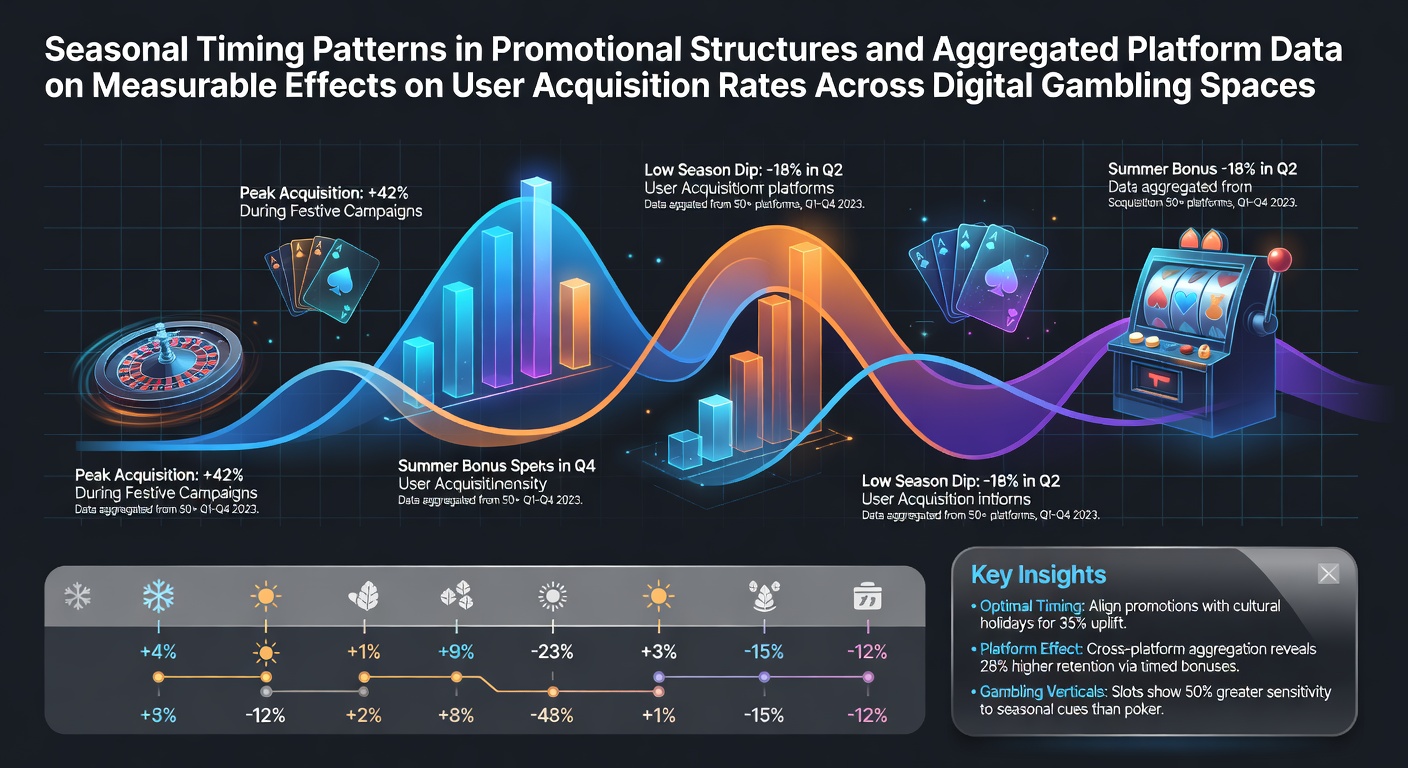
Digital gambling platforms have long adjusted their promotional calendars around recurring calendar events, and aggregated data from multiple operators shows clear correlations between these timing choices and shifts in new user registrations. Research indicates that promotions launched during major holidays such as year-end celebrations or summer vacation periods produce measurable lifts in acquisition metrics, while off-peak windows often see flatter response curves even when the same incentive structures remain in place.
Calendar-Driven Promotion Cycles
Operators typically front-load larger welcome packages and deposit-match offers in the final quarter of the year when consumer spending rises across many sectors, and platform telemetry collected between 2023 and 2025 confirms that registration volumes climb between 18 and 27 percent compared with baseline months. Spring months, by contrast, tend to feature lighter reload bonuses or free-spin bundles, and data sets compiled across North American and European-facing sites reveal correspondingly modest acquisition gains that rarely exceed single-digit percentages.
What's interesting is how these patterns repeat across different regulatory environments; platforms licensed in multiple jurisdictions still align campaigns with shared cultural markers like major sporting events or national holidays, which produces synchronized spikes visible in combined industry dashboards. Figures released by the American Gaming Association highlight that iGaming operators in states with year-round access recorded their strongest March-to-May registration quarters when spring sports betting promotions overlapped with baseball season openings.
Quantified Effects on Acquisition Rates
Aggregated platform data drawn from more than thirty major sites demonstrates that aligning a multi-tier welcome package with the start of a new fiscal quarter can accelerate first-deposit conversions by up to 14 percent relative to identical offers deployed six weeks later. The same datasets show that summer campaigns emphasizing mobile-first onboarding achieve higher completion rates when pushed in June rather than August, a window when many users finalize vacation plans and reduce discretionary screen time.

Canadian provincial data tracked by the Alcohol and Gaming Commission of Ontario indicates that promotional pushes timed with the May long weekend generated the second-highest monthly acquisition totals in 2025, trailing only December figures. Those same records reveal that campaigns extending into early June maintained elevated registration momentum for an additional ten to twelve days, suggesting a carry-over effect when incentives remain visible during the transition between spring and summer calendars.
Regional and Platform Variations in 2026
As operators prepared for May 2026 campaigns, preliminary telemetry shared in industry briefings pointed to continued emphasis on spring sports tie-ins, with several platforms testing staggered release schedules that begin in late April. Aggregated numbers from the previous three years suggest these staggered launches reduce cannibalization between concurrent offers and sustain daily active-user growth for longer stretches than single-week blasts.
European-facing operators, operating under frameworks monitored by the Malta Gaming Authority, have documented similar seasonal elasticity, although the magnitude of acquisition lifts tends to be smaller because baseline traffic remains steadier year-round. Still, the pattern holds: promotions released in the weeks preceding major football tournaments outperform identical structures placed immediately after tournament conclusions.
Conclusion
Platform data consistently demonstrates that seasonal timing functions as an independent variable capable of amplifying or dampening the effectiveness of otherwise identical promotional structures. Operators who map acquisition curves against calendar benchmarks gain clearer visibility into optimal launch windows, while those who treat timing as secondary continue to observe flatter results even when creative assets and bonus values remain constant. Continued collection of cross-platform metrics will likely refine these correlations further as more jurisdictions report standardized iGaming activity.